

Acru
DevelopersPricing
Sign in
Acru
DevelopersPricing Sign in
Articles/Payment operations

Payment operations

A clear payment operation starts with the right questions.

A practical framework for connecting checkout, transaction states, reconciliation, and customer support before complexity sets in.

Clara BennettContributing Writer @ Acru
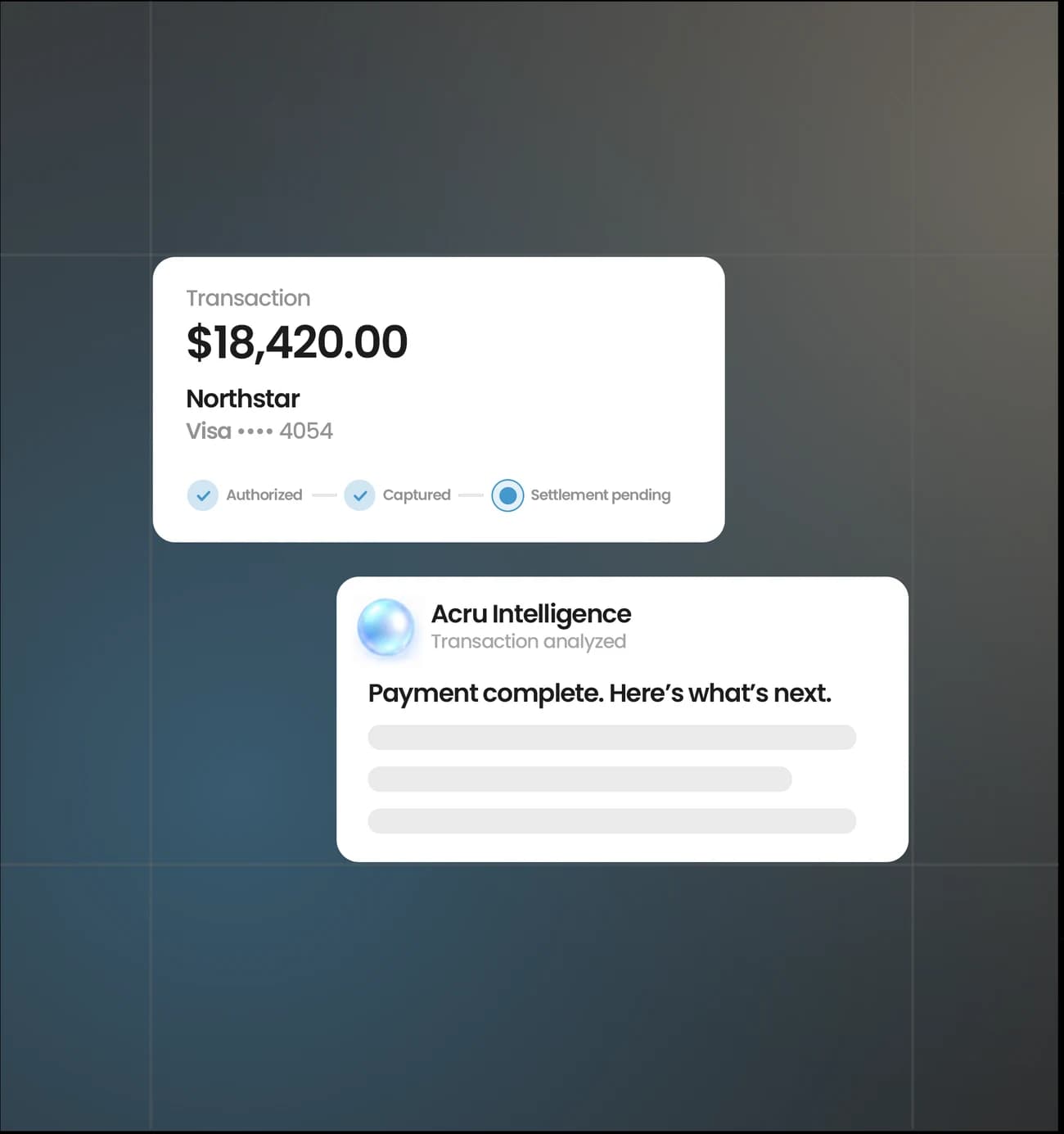
Acru transaction intelligence cards showing payment status and operational context
Good payment operations connect the decision, the movement, and the record.
In this article
  1. 01Start with the outcome, not the rail
  2. 02Design the states your teams will actually use
  3. 03Close the loop with reconciliation
  4. 04Make support part of the system
  5. 05Build for the next change

In this article

  1. 01Start with the outcome, not the rail
  2. 02Design the states your teams will actually use
  3. 03Close the loop with reconciliation
  4. 04Make support part of the system
  5. 05Build for the next change
October 4, 20268 min read

Start with the outcome, not the rail

Payment teams often begin with a list of methods. Stronger systems begin with the outcome a customer and an operator need to understand.

Map the complete moment: what the customer sees, what the payment system decides, what your order system records, and what the operations team can verify later. A fast authorization is useful, but it is not the same thing as a completed order or available funds.

This distinction becomes more important as you add wallets, bank payments, alternative methods, and markets. Each rail may move differently, while your customer still expects one clear answer.

Working principle

One customer action should create one traceable record.

Keep the order reference, payment attempt, final status, and any follow-on refund or dispute connected from the beginning.

Design the states your teams will actually use

A payment model should be precise enough for engineering and plain enough for support. Define the difference between initiated, action required, authorized, captured, failed, reversed, refunded, disputed, and settled in terms everyone can act on.

Then decide who owns each transition. Some states are driven by a customer, some by a network, and some by your own system. Clear ownership prevents a temporary delay from becoming a duplicate charge or an unnecessary escalation.

  • Give each attempt an idempotent reference before sending it to a provider.
  • Treat browser redirects and timeouts as incomplete information, not proof of failure.
  • Verify asynchronous outcomes before retrying or asking the customer to pay again.
  • Store the reason and next action alongside the status shown to an operator.
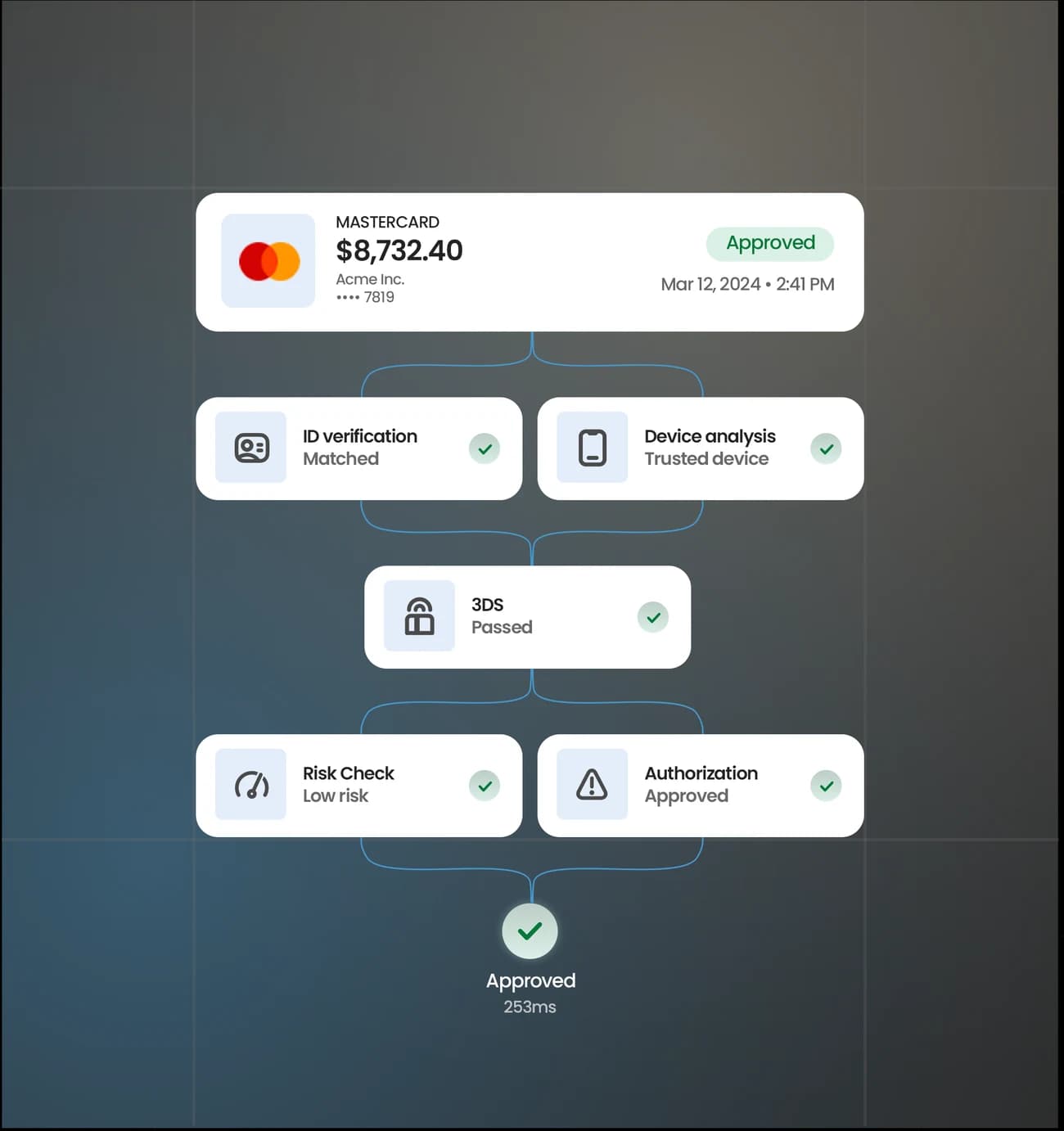
A payment moving through identity, device, risk, authentication, and authorization checks
The useful record is not only the decision. It is the path that produced it.

Close the loop with reconciliation

A dashboard can look complete while the books still require manual detective work. Reconciliation works best when the payment, fees, refunds, disputes, reserves, and settlement entries share durable references.

Build the exception path at the same time as the happy path. Your team should be able to identify what did not match, why it did not match, and who needs to act without exporting sensitive data into a spreadsheet.

The best operational view answers two questions at once: what happened, and what should happen next?

Make support part of the system

Customers rarely describe a payment problem with a processor status. They say they were charged twice, their order is missing, or their refund has not arrived. Give support a safe view that translates system state into that real-world concern.

That view should reveal enough context to resolve the issue while protecting credentials and sensitive payment data. Permission boundaries, audit history, and explicit actions matter just as much as search.

Operator checklist

Search, explain, act, confirm.

Let an operator find the record, understand the verified state, take a permitted action, and see whether that action succeeded.

Build for the next change

Your payment mix will change. New methods, markets, rules, and customer expectations will arrive. A connected model lets you add those capabilities without inventing a separate operational language each time.

The goal is not more payment infrastructure. It is a payment operation that stays understandable as the business grows. Start with the records and decisions your teams need, then choose the technology that keeps them connected.


Related articles

Connected payout tracks leading funds toward a receiving destinationMoney movementChoose a payout path your operation can explain.Connected platform tracks splitting one payment across several destinationsPlatformsModel marketplace money movement before you build it.

Keep reading

Related articles

View all articles
Money movement6 min read

Choose a payout path your operation can explain.

Speed matters, but destination eligibility, funding, exceptions, and reconciliation determine whether a payout experience really works.

Read article
Platforms7 min read

Model marketplace money movement before you build it.

Define participants, balances, fees, reversals, and responsibilities as one system before connecting the first seller.

Read article
Acru

More possibility.
Less between you and it.

Accept payments

  • Payments overview
  • Card processing
  • Checkout
  • Bank payments
  • Digital wallets
  • Alternative payment methods
  • Subscriptions

Move money

  • Payouts overview
  • Real-time payments
  • Push to card
  • Settlement
  • Digital assets

Platforms & operations

  • Platforms
  • Merchant onboarding
  • Split payments
  • Reporting & reconciliation
  • Developer platform

Risk & intelligence

  • Risk overview
  • Authorization
  • Chargeback protection
  • Security

Solutions

  • Ecommerce
  • Fintech
  • Gaming
  • Marketplaces
  • Remittances
  • Global payroll

Explore Acru

  • Guides & insights
  • Articles
  • FAQs
  • Help center
  • Pricing
  • About Acru
  • Partners
  • Contact
  • PCI DSS Validated Level 1 Service Provider
  • AICPA SOC for Service Organizations

© 2026 Acru, Inc.

TermsPrivacySecurity